✍️ Opening note: I love coming up with ideas and testing concepts. This creative concept series is where I do exactly that, building fictional concepts that demonstrate real content strategies and marketing examples in action, with the hope of inspiring businesses with ideas along the way.
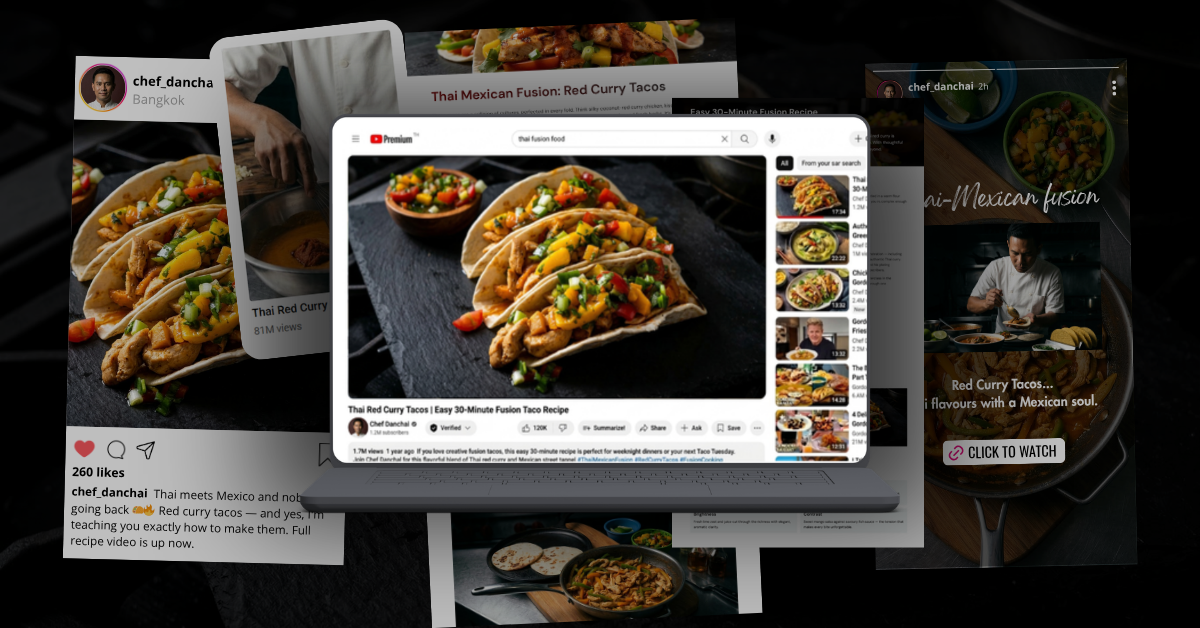
I was working on a content waterfall system guide and the steps to implement one, and thought this creative concept demonstrating a content waterfall in action would be helpful to see the system come to life.
For this concept, I had the idea to use a long-form video of a cooking demonstration taken from a chef’s personal YouTube channel.
Why, you ask? My daughter was sitting next to me singing this silly song that goes ‘it’s raining tacos’ when I thought that Thai and Mexican food would make an epic fusion and that someone needs to create Thai-fusion tacos. So I ended up imagining this as marketing for a Thai chef’s personal brand. And yes, that is how my brain works.
Anchor Asset: Long-Form YouTube Video
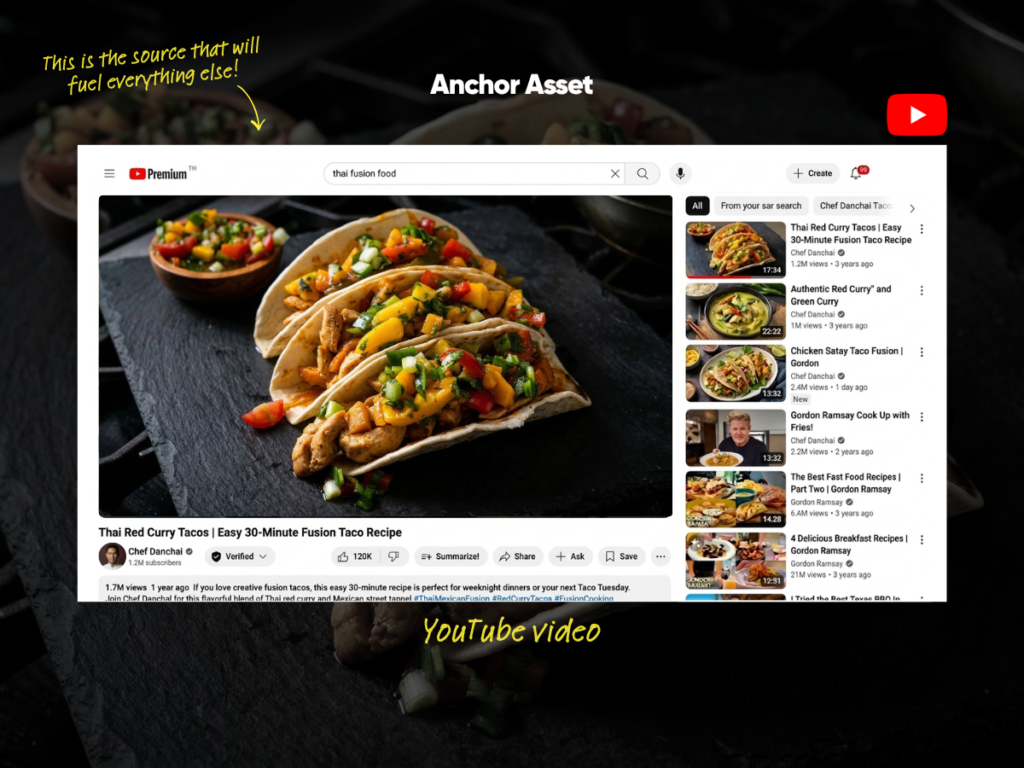
If I was a chef, I’d think about the main reasons people follow my personal brand. And one obvious answer would be the food. So cooking demonstrations and showing followers how to make your signature dishes is simply giving the people what they want.
There are various formats suitable to showcase this, and I’ve selected a long-form video as the anchor.
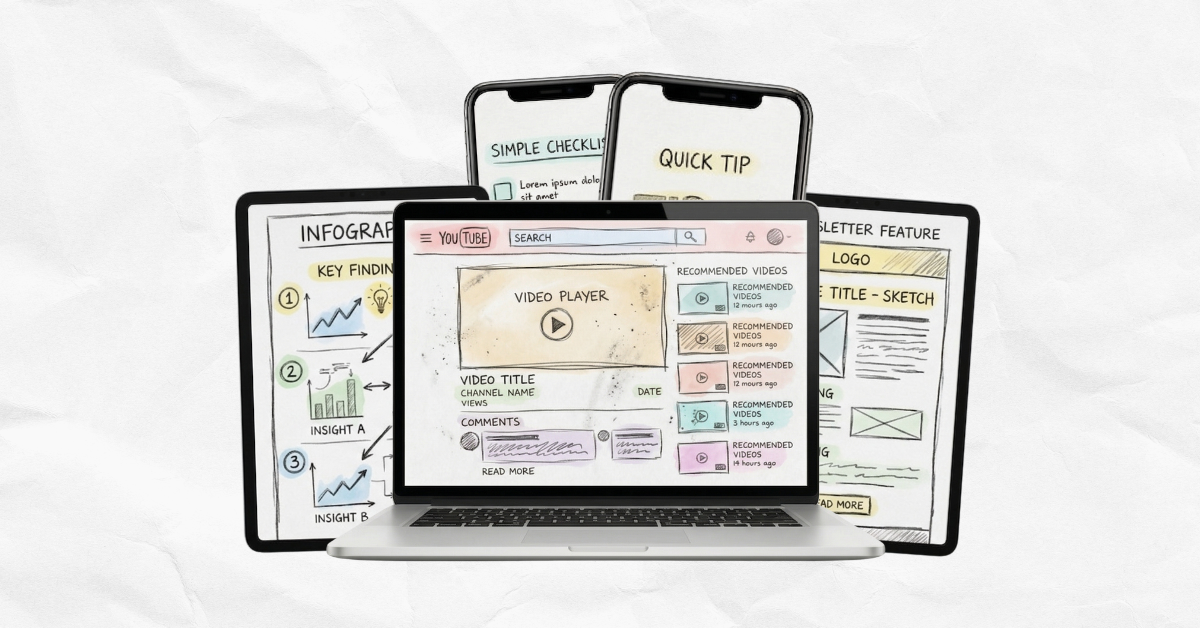
This video would cover everything, from the ingredients to the meal prep to each step of making the dish. It would start simply with a dish idea and writing down everything around it on paper.
Write that down once, and from there it can be transformed into so much other content. First the script and storyboard for the long-form video, but also other assets further down the waterfall.
The final asset, the video itself, would live on the chef’s YouTube channel. And just by having it there, we can also embed or link to it in other places, such as a website or blog.
Mid-Tier Assets: Newsletter and Blog Post
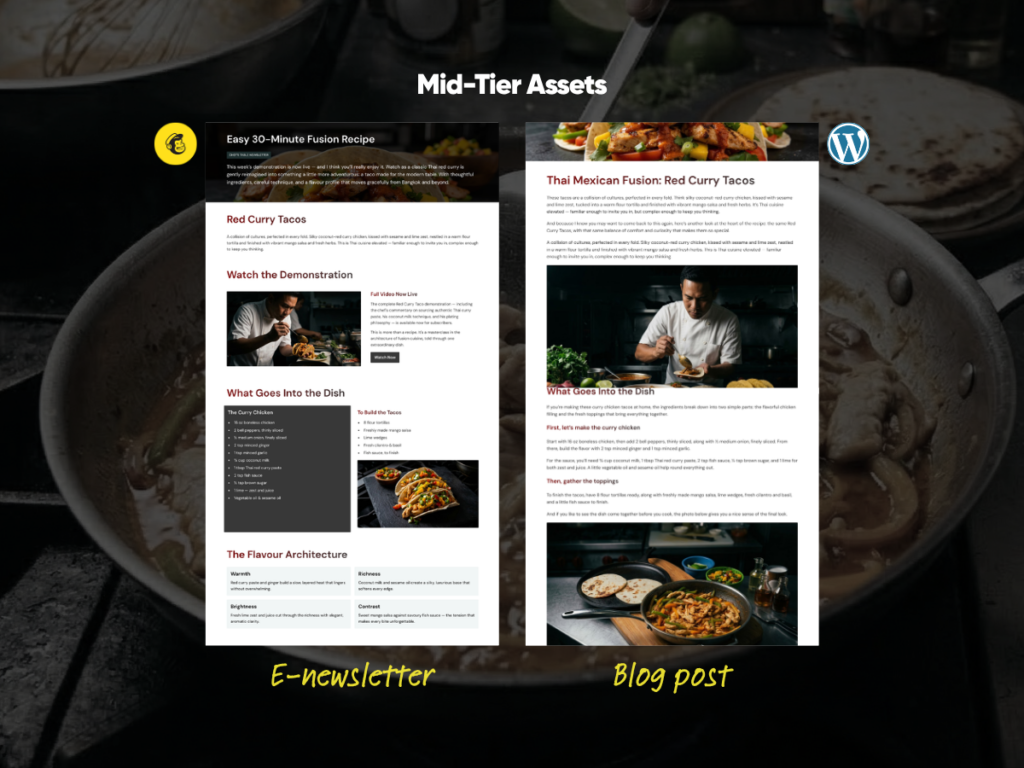
From the notes I mentioned writing up at the start, we can use and adapt parts of that across other forms of content, not just for planning the anchor asset.
The first is a newsletter to the chef’s existing mailing list, giving subscribers a reason to try the recipe themselves whilst naturally driving views back to the video.
The second is a blog post or webpage on the chef’s site, turning the video into step-by-step written instructions for those who prefer to read rather than watch.
People consume content differently, so it’s good to diversify both the formats and distribution channels. At this stage I’ve covered video (YouTube), long-form articles (the blog), and email (the newsletter). Three distinct formats, three distinct places to reach the audience.
Micro Assets: Social Media Content
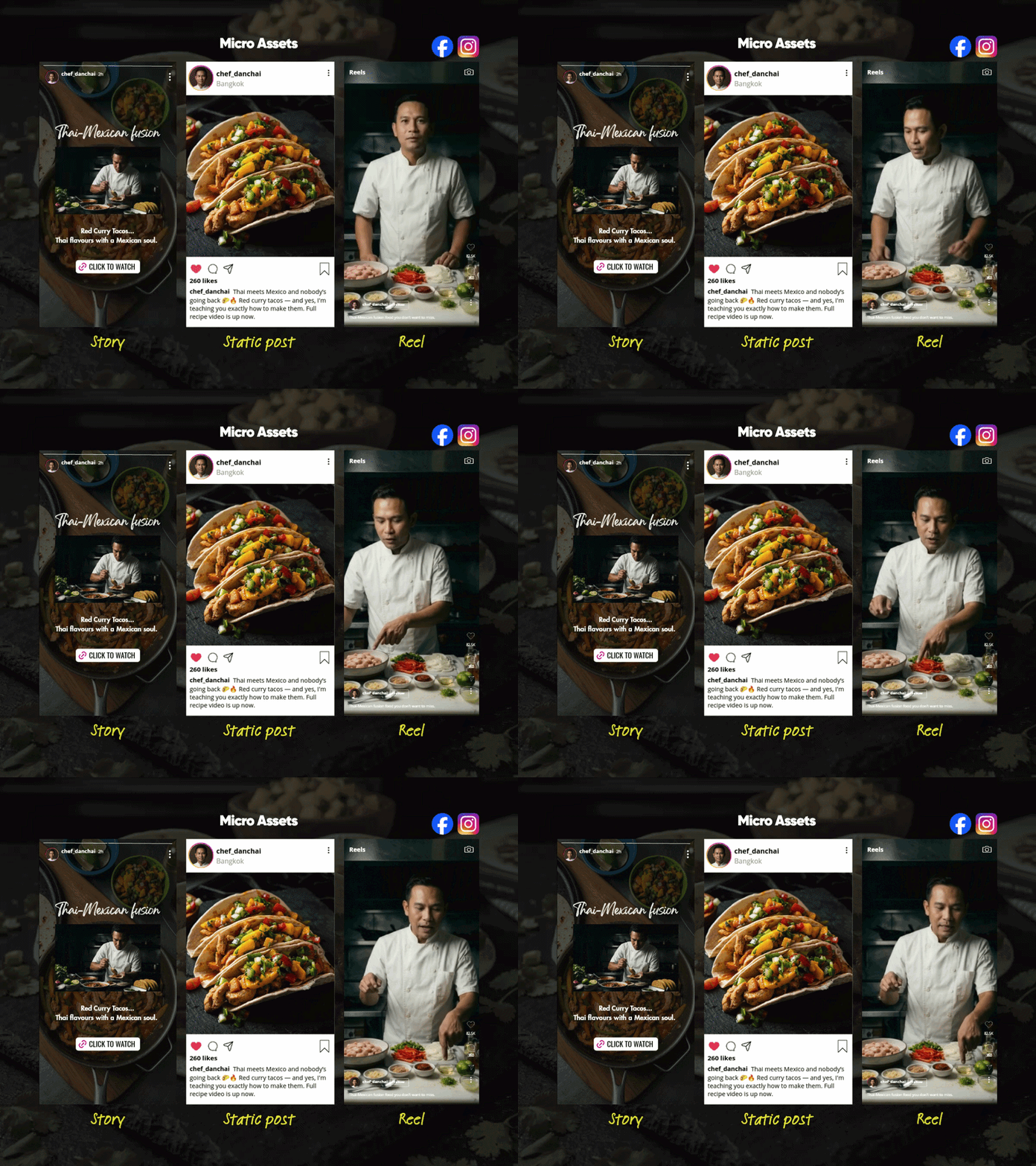
Finally, we have micro assets. These bite-sized bits capture attention with snippets and elements from the anchor asset.
Different social media channels could work here, depending on the audience and where they’re most active, of course. I selected Facebook and Instagram for this example due to the visual nature of the platforms.
In this example, we have:
- A Story to announce the new video with a direct link to watch the full version.
- A static photography post of the final dish to make followers hungry and wanting more.
- Reels, extracted from key parts of the video. There can be multiple if the video has enough moments worth pulling out.
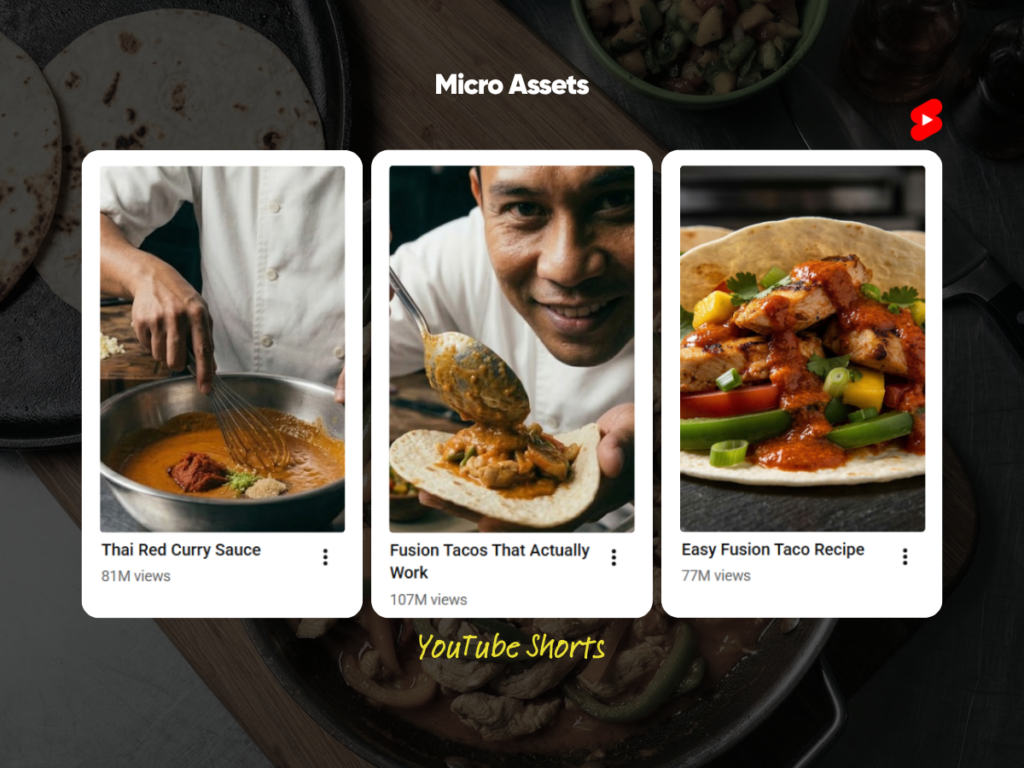
- YouTube Shorts. Don’t forget that Reels can also be uploaded to YouTube as Shorts for an additional distribution layer!
Final Thoughts
This hopefully shows you how easy it can be to take one idea and diversify it across different formats and distribution channels.
Find out where your audience is and focus on reaching them there, instead of spreading yourself too thin.
If you want to dive deeper into content waterfalls:
👉 Want to learn more about content waterfall systems? Read my guide here.
Quick note: The content referenced in this example is entirely fictional, and is here to bring the concept to life, not to represent a real person or business.